The creepage distance of insulators is a determining factor in defining the power-frequency withstand voltage of the network under various climatic conditions. In accordance with IEC 60815-1, this parameter is determined based on the level of environmental pollution affecting the insulation in each area.
In recent years, the occurrence of dust storms and industrial pollution has increased in many regions of Iran. As a result, the creepage distance selected during the initial design and construction of transmission lines and substations may no longer be adequate for the current operating environment, particularly due to the increased level of pollution.
The insulation pollution severity class has increased in many regions of the country in recent years. Therefore, a corresponding increase in the creepage distance along insulator strings is required by network operators. On the other hand, improper design of the profile of sheds used on insulators for high-voltage substation equipment can reduce their performance under conditions of rain, snow, and freezing.
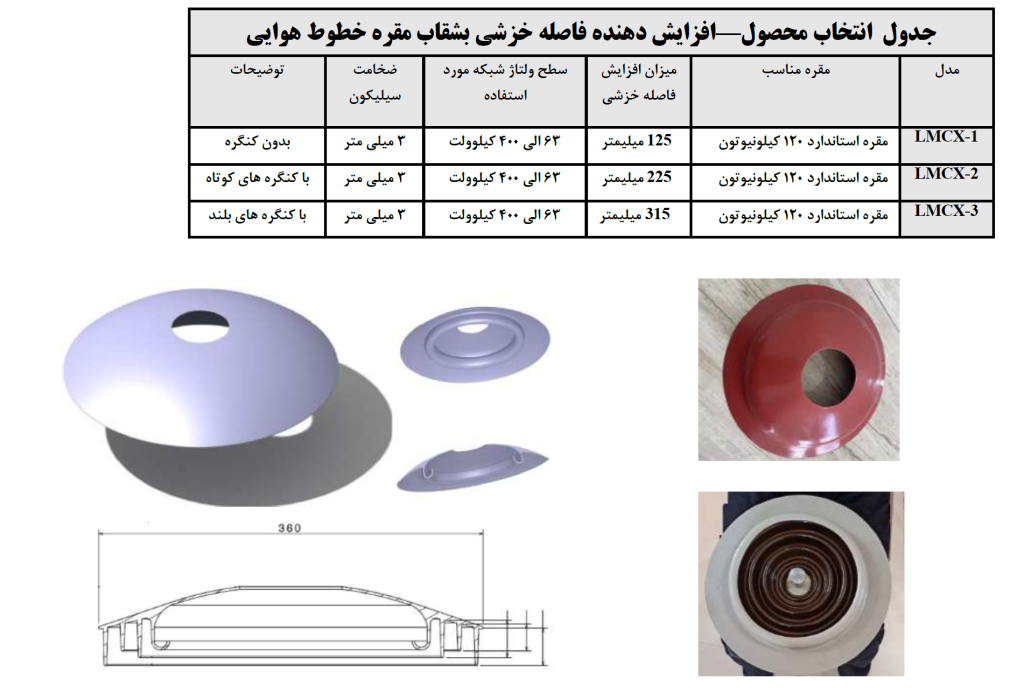
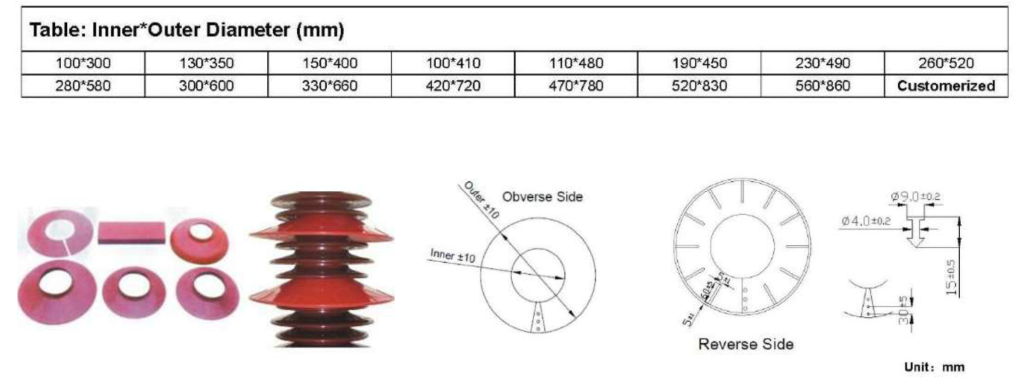
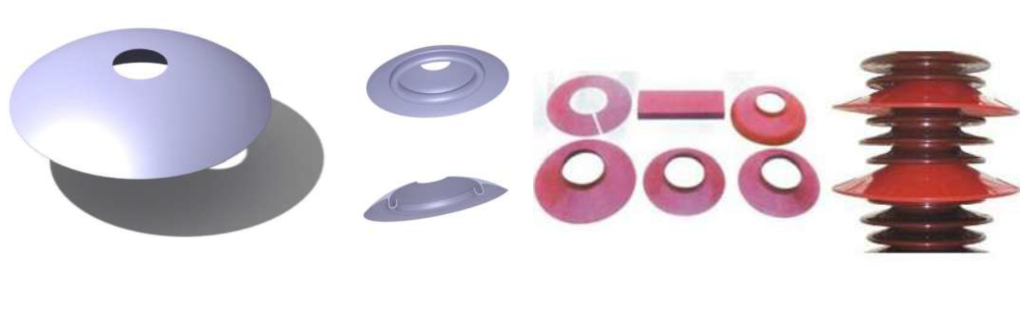
The Creepage Extender, manufactured by Lian Mehregan Sanat, can be installed on existing ceramic and glass insulator discs used on transmission lines, as well as on insulators of high-voltage substation equipment, to increase the creepage distance according to the required value specified by the client.
For example, depending on the selected product, as shown in the table on the following page, the creepage distance of a single insulator disc can be increased from 295 mm to 420, 520, or 610 mm. This corresponds to an improvement of approximately 22% to 32% in the network’s resilience and stability against pollution, dust, moisture, rainfall, and freezing conditions.
The product is easy to install and is securely attached to the insulator using a specially formulated silicone adhesive. All tests of the product have been successfully conducted at the Niroo Research Institute, demonstrating the long-term performance and reliability of these creepage extenders in network operation.
The key benefits of using these creepage extenders in power networks include:
Improved reliability and insulation performance of the network under heavy pollution and dust conditions
Improved reliability and insulation performance under rain, snow, and freezing conditions
Compensation for insufficient creepage distance in areas where the insulation pollution severity class has increased
Compensation for inadequate shed profile design on insulators used in high-voltage substation equipment
Reduction of faults and leakage current, resulting in fewer network outages
Protection of network assets and reduction of undelivered electrical energy